


Aircraft Scale Model Chart
Below are the Lengths (L) and Wingspans (W) of the different scales/aircraft types in Cm's
| 1/200 scale | 1/400 scale | 1/500 scale | ||||
| Aircraft Type | Length CM | Wingspan CM | Length CM | Wingspan CM | Length CM | Wingspan CM |
| Airbus A300-B4 | 27 | 22 | 13 | 11 | 11 | 9 |
| Airbus A300-600 | 27 | 22 | 14 | 11 | 11 | 9 |
| Airbus A310 | 23 | 22 | 12 | 11 | 9 | 9 |
| Airbus A318 | 16 | 17 | 8 | 9 | 6 | 7 |
| Airbus A319 | 17 | 17 | 8 | 9 | 7 | 7 |
| Airbus A320 | 19 | 17 | 9 | 9 | 8 | 7 |
| Airbus A321 | 22 | 17 | 11 | 9 | 9 | 7 |
| Airbus A330-200 | 30 | 30 | 15 | 15 | 12 | 12 |
| Airbus A330-300/800/900 | 32 | 30 | 16 | 15 | 13 | 12 |
| Airbus A340-200 | 30 | 30 | 15 | 15 | 12 | 12 |
| Airbus A340-300 | 32 | 30 | 16 | 15 | 13 | 12 |
| Airbus A340-500 | 34 | 32 | 17 | 16 | 14 | 13 |
| Airbus A340-600 | 37 | 32 | 19 | 16 | 15 | 13 |
| Airbus A350-900 | 34 | 33 | 17 | 16 | 13 | 13 |
| Airbus A350-1000 | 37 | 33 | 18 | 17 | 15 | 13 |
| Airbus A380 | 36 | 40 | 18 | 20 | 15 | 16 |
| ATR-42 | 11 | 12 | 6 | 6 | 5 | 5 |
| ATR-72 | 14 | 14 | 7 | 7 | 5 | 5 |
| BAe146-100 | 13 | 13 | 7 | 7 | 5 | 5 |
| BAe146-200 | 14 | 13 | 7 | 7 | 6 | 5 |
| BAe146-300 | 15 | 13 | 8 | 7 | 6 | 5 |
| Boeing 707 | 23 | 22 | 12 | 11 | 9 | 9 |
| Boeing 717-200 | 19 | 14 | 9 | 7 | 8 | 6 |
| Boeing 727-100 | 20 | 16 | 10 | 8 | 8 | 7 |
| Boeing 727-200 | 23 | 16 | 12 | 8 | 9 | 7 |
| Boeing 737-200 | 15 | 14 | 8 | 7 | 6 | 6 |
| Boeing 737-300 | 17 | 14 | 8 | 7 | 7 | 6 |
| Boeing 737-400 | 18 | 14 | 9 | 7 | 7 | 6 |
| Boeing 737-500 | 16 | 14 | 8 | 7 | 6 | 6 |
| Boeing 737-600 | 16 | 17 | 8 | 9 | 6 | 7 |
| Boeing 737-700 | 17 | 17 | 8 | 9 | 7 | 7 |
| Boeing 737-800 | 20 | 17 | 10 | 9 | 8 | 7 |
| Boeing 737-900 | 21 | 17 | 11 | 9 | 8 | 7 |
| Boeing 747SP | 28 | 30 | 14 | 15 | 11 | 12 |
| Boeing 747-200/300 | 35 | 30 | 18 | 15 | 14 | 12 |
| Boeing 747-400 | 35 | 32 | 18 | 16 | 14 | 13 |
| Boeing 757-200 | 24 | 19 | 12 | 10 | 9 | 8 |
| Boeing 757-300 | 27 | 19 | 14 | 10 | 11 | 8 |
| Boeing 767-200 | 23 | 24 | 12 | 12 | 9 | 10 |
| Boeing 767-300 | 27 | 24 | 14 | 12 | 11 | 10 |
| Boeing 767-400 | 31 | 26 | 15 | 13 | 12 | 10 |
| Boeing 777-200 | 32 | 30 | 16 | 15 | 13 | 12 |
| Boeing 777-300 | 37 | 30 | 18 | 15 | 15 | 12 |
| Boeing 787-8 | 28 | 30 | 14 | 15 | 11 | 12 |
| Boeing 787-9 | 32 | 30 | 16 | 15 | 13 | 12 |
| Boeing 787-10 | 34 | 30 | 17 | 15 | 14 | 12 |
| Concorde | 31 | 13 | 16 | 6 | 12 | 5 |
| CRJ-200 | 13 | 11 | 7 | 5 | 5 | 4 |
| CRJ-700 | 16 | 12 | 8 | 6 | 7 | 5 |
| CRJ-900 | 18 | 12 | 9 | 6 | 7 | 5 |
| Dash8-100/200 | 14 | 12 | 7 | 6 | 5 | 5 |
| Dash8-300 | 13 | 14 | 6 | 7 | 5 | 5 |
| Dash8-400 | 16 | 14 | 8 | 7 | 7 | 6 |
| DC-8-30/40/50 | 23 | 22 | 11 | 11 | 9 | 9 |
| DC-8-62 | 24 | 23 | 12 | 11 | 10 | 9 |
| DC-8-61/63 | 29 | 23 | 14 | 11 | 11 | 9 |
| DC-9-30 | 18 | 14 | 9 | 7 | 7 | 6 |
| DC-9-40 | 19 | 14 | 10 | 7 | 8 | 6 |
| DC-9-50 | 20 | 14 | 10 | 7 | 8 | 6 |
| DC-10-10 | 28 | 24 | 14 | 12 | 11 | 9 |
| DC-10-30 | 28 | 25 | 14 | 13 | 11 | 10 |
| Do328/328Jet | 11 | 10 | 5 | 5 | 4 | 4 |
| EMB120 | 10 | 10 | 5 | 5 | 4 | 4 |
| ERJ135 | 13 | 10 | 7 | 5 | 5 | 4 |
| ERJ140 | 14 | 10 | 7 | 5 | 6 | 4 |
| ERJ145 | 15 | 10 | 7 | 5 | 6 | 4 |
| Embraer170 | 15 | 13 | 7 | 7 | 6 | 5 |
| Fokker70 | 15 | 14 | 8 | 7 | 6 | 6 |
| Fokker100 | 18 | 14 | 9 | 7 | 7 | 6 |
| MD-11 | 31 | 26 | 15 | 13 | 12 | 10 |
| MD-81/82/83/88 | 23 | 16 | 11 | 8 | 9 | 7 |
| MD-87 | 20 | 16 | 10 | 8 | 8 | 7 |
| MD-90-30 | 19 | 16 | 9 | 8 | 8 | 7 |
| MD-90-40 | 26 | 16 | 13 | 8 | 10 | 7 |
| L-1011 | 27 | 24 | 14 | 12 | 11 | 9 |
| L-1011-500 | 25 | 25 | 13 | 13 | 10 | 10 |
| Tu-154 | 24 | 19 | 12 | 9 | 10 | 8 |

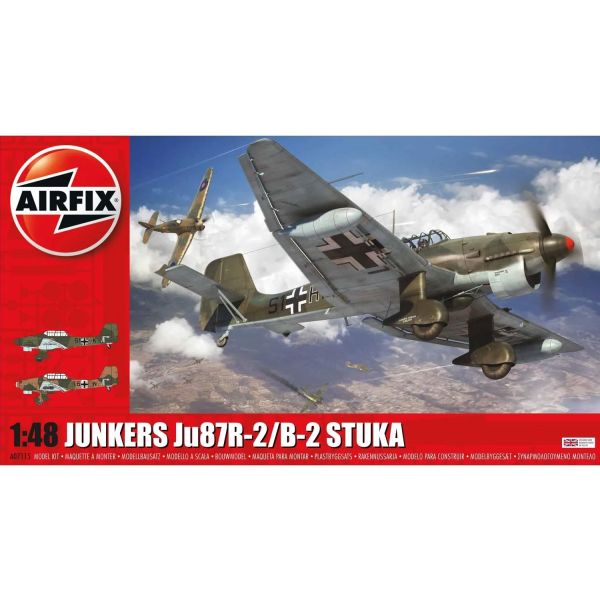
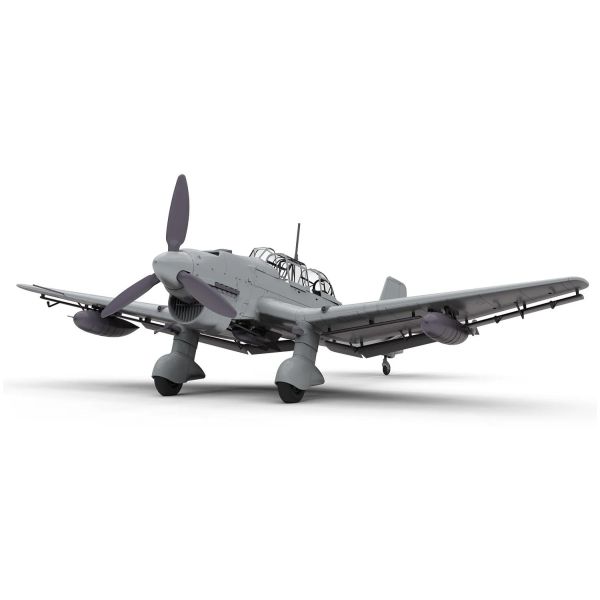
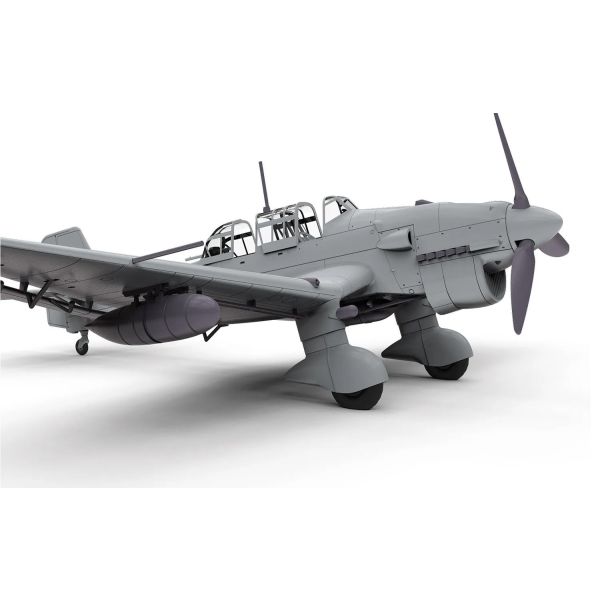
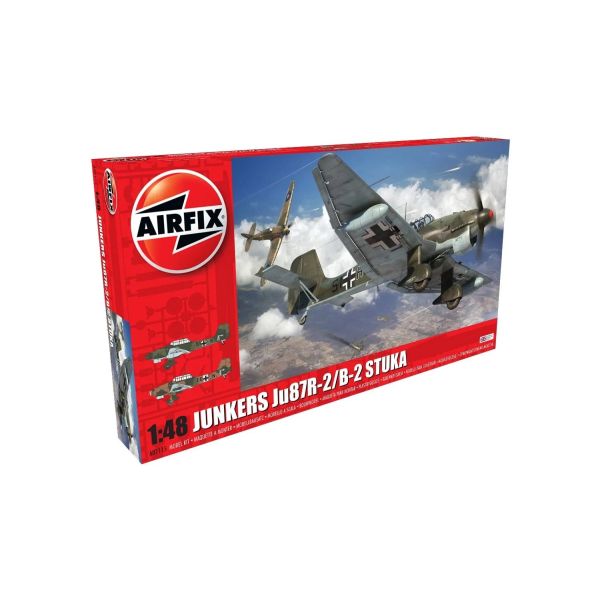
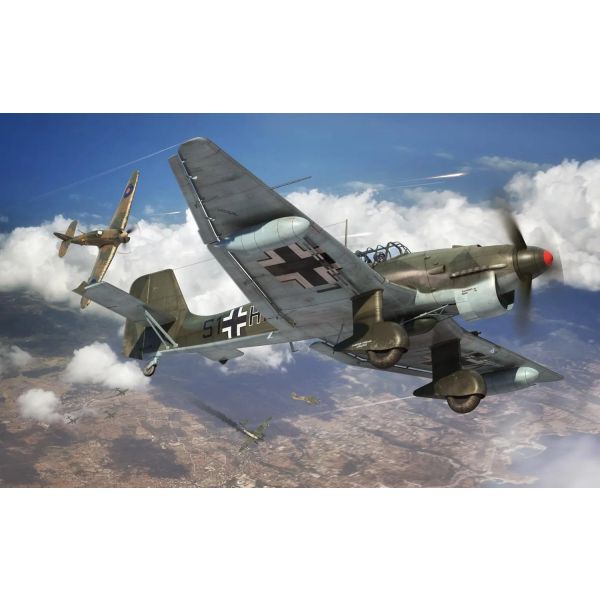

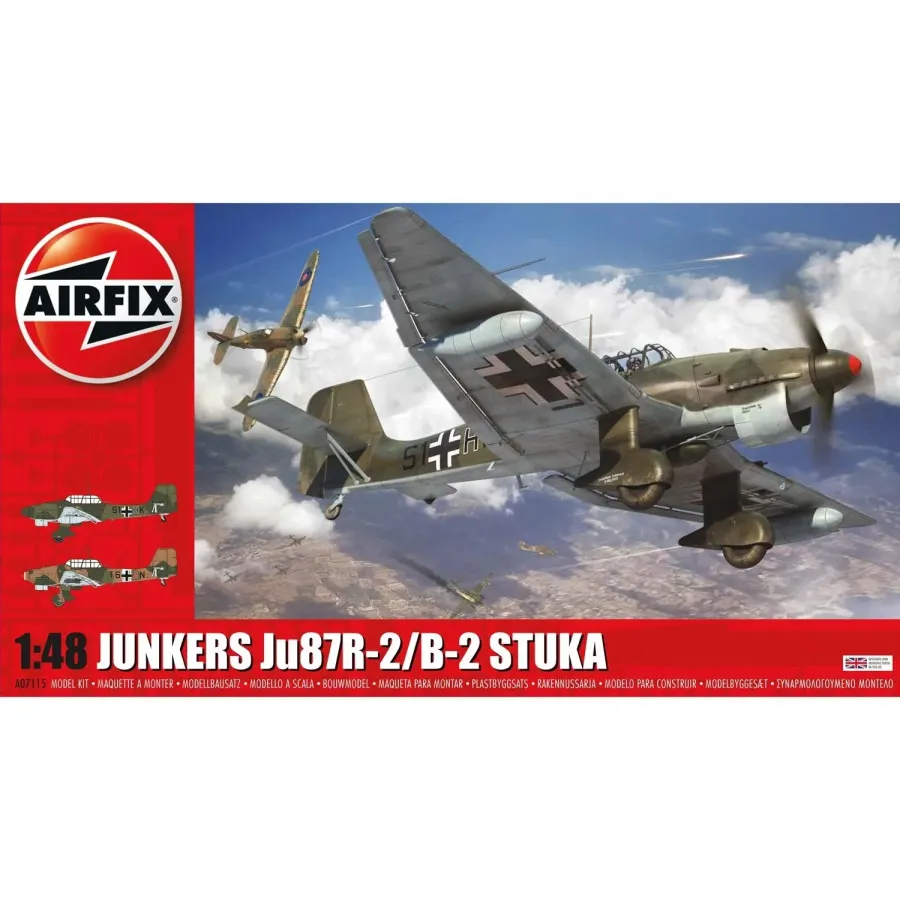
This remarkable 1:48 scale model of the Junkers Ju87R-2/B-2 Stuka comprises 158 components, providing modellers aged 8 and older with a detailed replica of one of WWII's most renowned dive bombers. While commonly associated with the Wehrmacht's early WWII Blitzkrieg tactics, the Ju87B Stuka also served as an effective maritime strike bomber, executing precise dive bombings on Allied ships, causing significant damage in the English Channel, North Africa, and the Mediterranean.
Key Features
- 1:48 scale model featuring 158 components for intricate assembly
- Skill level 3 build, ideal for seasoned modellers
- Completed model boasts a wingspan of 288mm
- Includes two authentic paint schemes
- Highly detailed depiction of this formidable dive bomber
- Constructed from plastic with precision-moulded parts
History
The Stuka was employed by the air forces of Italy, Romania, Bulgaria, and Hungary, and remained in service with the Luftwaffe throughout WWII. Its dive attack was so intense that numerous automatic features were integrated into the manoeuvre.
At an altitude of roughly 15,000 ft, the pilot would identify his target through a bombsight window located on the cockpit floor. Automatic controls for the engine and propeller optimised the aircraft during a dive, while an automatic trimmer made the aircraft tail-heavy as the pilot initiated the dive. Pulling the dive lever back limited the control column's movement and initiated a sequence that, if executed correctly, ensured the ordnance reached its target. The pilot adjusted trim tabs, reduced throttle, and closed the engine coolant flaps. The aircraft automatically became tail-heavy and rolled into a steep nose-down dive. Dive brakes deployed automatically to maintain a constant speed of 360 mph. This marked the point of no return.
As the pilot endured increasing physical strain, he checked the dive angle by aligning red lines on the cockpit window with the horizon at angles of 60, 75, or 80 degrees. He then aimed through the fixed gunsight and released the main bomb at the optimal height, indicated by a light on the altimeter. The bomb was mounted on a large U-shaped cradle that swung down upon release, clearing the propeller and striking the target. During this process, the pilot glanced at red pins on the wing tops, confirming the automatic dive recovery system was engaged in case of a blackout due to g-forces. All this occurred within a few seconds.
After releasing the bomb, the aircraft initiated its dive recovery sequence, during which the crew experienced maximum g-forces, often exceeding six times gravity, risking vision impairment. Once the nose rose above the horizon, dive brakes retracted automatically, the throttle was opened, and the propeller was set for climbing. The pilot then manually opened the coolant flaps to prevent engine overheating and resumed flight.
At this juncture, the Stuka was most vulnerable, flying low and slow in hostile territory. The rear gunner might still be unconscious, and the pilot could feel light-headed, while every nearby anti-aircraft gun, rifle, and enemy fighter targeted them from all directions.
Related Products