


How to Display Model Aircraft at Home Without Damaging Them
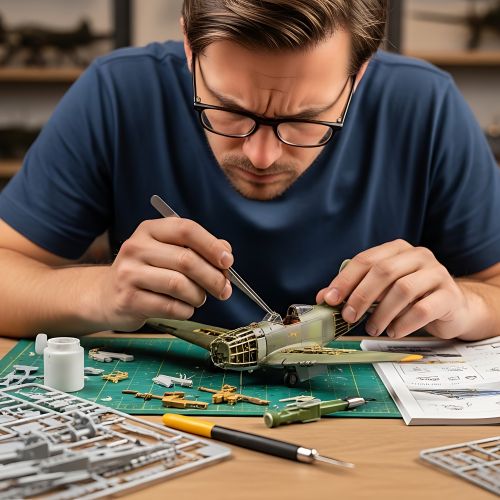
A model aircraft on display should look as good in ten years as it did the day it came out of the box. In reality, most damage to collectable models doesn't happen in transit or during handling. It happens slowly, on the shelf, from sunlight, dust, heat and the wrong kind of stand.
Whether you collect 1:400 airliners, 1:72 military jets or large resin display models, the right setup protects paintwork, decals and delicate parts like pitot tubes, aerials and landing gear. We asked Andrew Clark at Flightstore, who works with collectors every day, for the advice he gives most often.
The five things that damage display models
Most display damage comes from five causes. Knowing them makes every other decision easier.
Threat | What it does | Most at risk |
Direct sunlight (UV) | Fades paint and liveries, yellows clear parts, makes decals brittle and lift | Airliner liveries, white and pale colour schemes, clear canopies |
Dust | Dulls finishes, settles into panel lines, and cleaning it off risks snapping small parts | Detailed military models, models with rigging or aerials |
Heat and temperature swings | Softens glue and plastic, warps thin parts, weakens decal adhesive | Plastic and resin models near radiators, lamps or in conservatories |
Humidity | Encourages corrosion on metal parts and can cause wooden models to swell or crack | Diecast models, wooden desktop models, anything stored in lofts or garages |
Stress and handling | Bends landing gear, snaps antennas and propellers, and knocks models off shelves | Large-scale models, models resting on their gear for years |
"Sunlight is the one that catches people out, because the damage is invisible until it's done. A livery can fade on one side only, and by the time you notice, there's no reversing it." Andrew Clark, Flightstore
Choosing the right spot in your home
The best location is a stable, shaded, low-traffic room that stays at a comfortable living temperature all year. A shelf on an internal wall in a study, lounge or hallway usually works well.
Good places to display models:
Shelves on internal walls, away from windows
Rooms with steady heating and low humidity, such as a study or living room
At or above eye level, where they're less likely to be knocked by people, pets or children
Glass-fronted cabinets in rooms that don't get direct sun
Places to avoid:
Windowsills and shelves opposite south-facing windows
Above or near radiators, fireplaces, wood burners and heaters
Kitchens, where grease and steam settle on surfaces
Bathrooms, conservatories, lofts and garages, where humidity and temperature swing most
Busy corridors, low coffee tables and anywhere a door can swing into a shelf
Lighting matters too. LED lighting gives off very little heat and almost no UV, so it's the safest way to light a display. Avoid halogen spotlights close to models, as they run hot.
"A simple test is to stand where the model will go at different times of day. If the sun reaches that spot at any point, even for an hour in summer, move it or use UV-filtering glass." Andrew Clark, Flightstore
Display cases: when and what kind
A closed display case is the single most effective way to protect a model. It keeps out dust, reduces accidental knocks and, with the right material, blocks UV. For valuable, limited edition or highly detailed models, a case is worth it.
Case type | Pros | Watch out for |
Acrylic (Perspex) single case | Light, shatter-resistant, affordable, many include a base for a stand | Scratches easily, so clean with a microfibre cloth only; standard acrylic offers limited UV protection unless specified |
UV-filtering acrylic | Blocks most UV while staying clear | Costs more, check the product description for the UV rating |
Glass cabinet | Scratch-resistant, holds a whole collection, looks like furniture | Heavy, and standard glass lets through some UV; cabinet lights can add heat if not LED |
Wall-mounted display case | Saves floor and shelf space, ideal for 1:400 and 1:500 airliners | Needs secure fixings into studs or with the right wall plugs |
Choose a case with at least 1 to 2 cm of clearance around the wingtips, nose and tail. A tight fit means the model gets scraped every time it goes in or out.
"Measure the wingspan and length before you buy a case, then add a little room. A common mistake is a case where the model technically fits, but only just, and the aerials catch on the lid." Andrew Clark, Flightstore
Stands, wall mounts and hanging models
How a model is supported matters as much as where it sits. Years of weight on the wrong point can bend landing gear or crack a wing root.
Resting on landing gear. Fine for most diecast and plastic models with sturdy gear, especially at smaller scales. For large or heavy models, check the gear every few months for any lean or splay.
Display stands. An in-flight stand takes the weight off the undercarriage and shows the aircraft as it's meant to be seen. Use the stand designed for your model where one exists, as it will fit the mounting point correctly. If using a universal stand, support the model at its centre of gravity, usually just behind the wing roots, so it doesn't tip or put strain on one side.
Wall mounts. Good for larger models and for saving shelf space. Fix into a stud or use wall plugs rated well above the model's weight, and keep the mount away from doorways where it can be knocked.
Hanging from the ceiling. Works for lightweight plastic kits, but use clear nylon line at two or more points to stop spinning, and keep models well above head height. Hanging isn't recommended for heavy diecast or resin models.
"For larger diecast models, 1:200 airliners or 1:48 military aircraft and up, I'd always recommend a stand rather than leaving it on its wheels long term. Undercarriage legs are built for looks, not for carrying the full weight of a metal model for years." Andrew Clark, Flightstore
Dusting, cleaning and handling
Regular light dusting prevents the build-up that needs heavier cleaning later. Every few weeks is enough for open shelves; cased models may only need attention once or twice a year.
Start with air. Use a soft blower bulb (the kind sold for camera lenses) to lift loose dust without touching the model.
Use a soft brush for the rest. A clean, soft make-up brush or wide paintbrush reaches panel lines and around engines without catching small parts.
Finish with a microfibre cloth on flat surfaces only, such as the fuselage and wing tops.
Avoid water, household sprays and polish. They can lift decals, cloud clear parts and strip tampo-printed liveries.
Clean display cases with a microfibre cloth and an acrylic-safe cleaner. Never use glass cleaner on acrylic, as it can cause fine cracking.
Handling tips:
Hold models by the fuselage, never by the wings, tail, propellers or gear
Wash and dry your hands first, as skin oils mark paint and metal
Keep the original box and packaging for moving house or long-term storage
If storing models, keep them boxed in a dry, temperature-stable room, not a loft or garage
Displaying a growing collection
As a collection grows, crowding becomes the main risk. Models packed wingtip to wingtip get scratched every time one is moved.
Group by theme. Arrange by airline, era, air force or aircraft type. It looks more considered and makes it easier to find space for new additions.
Keep to one scale per shelf. Mixing scales on one shelf makes the display look uneven and leaves smaller models hidden behind larger ones.
Use tiered risers. Clear acrylic steps let you show two or three rows without the back row being hidden or reached over.
Leave space to lift each model out without touching its neighbours.
Rotate your display. Swapping models between the shelf and boxed storage keeps the display fresh and limits each model's light exposure.
Keep a simple record of each model, its box and its condition. It helps with insurance and if you ever sell or trade.
Frequently asked questions
What is the best way to display model aircraft? In a closed display case, on a shelf on an internal wall, away from sunlight and heat. Larger or heavier models are best shown on a stand rather than resting on their landing gear.
How do I stop my model planes getting dusty? A display case is the most effective option. For open shelves, dust lightly every few weeks with a blower bulb and a soft brush.
Does sunlight damage model aircraft? Yes. UV light fades paint and liveries, yellows clear parts and weakens decals. The damage is permanent, so keep models out of direct sun or use UV-filtering cases.
Can I hang model aircraft from the ceiling? Lightweight plastic kits can be hung using clear nylon line at two or more points. Heavy diecast and resin models should be displayed on stands or shelves instead.
How should I clean a diecast model plane? Use a blower bulb and soft brush, then a microfibre cloth on flat surfaces. Avoid water, sprays and polish, which can lift decals and printed liveries.
Should I keep the original box? Yes. The box protects the model when moving or storing it, and for many collectables it's part of the resale value.
About the expert
Andrew Clark is Managing Director at Flightstore, the UK specialist in model aircraft, aviation gifts and pilot supplies. With over 20 years helping collectors choose, protect and display their models, he advises on everything from 1:400 airliners to large-scale diecast military aircraft.